Tuesday, March 11, 2014

The Fourth Step & My Son

For those readers who don't know, I am a psychotherapist who specializes in, but is not limited in my scope of practice, to sexual addiction.  I meet with people who often are powerless over their "inappropriate" sexual activities and whose lives have become quite unmanageable as a result. If that wording seems vaguely familiar, it is a paraphrase of the First Step of the Twelve Steps to Recovery.

From 2009 through 2012, I was involved with the LDS Church's Addiction Recovery Program (ARP).  Similar to Alcoholics Anonymous, Sexaholics Anonymous, and other addiction recovery programs, the ARP ultilizes in its group meetings the Twelve Steps to Recovery that the "Anonymous" world uses, only with an LDS spin. During this time, I led multiple "addicts" groups.

It was while I was involved with leading ARP groups that I came to really understand the Twelve Steps of Recovery.  Although the LDS Twelve Steps are slightly different than those used by AA, NA, SA, etc., the basic ideas are the same.  I came to understand the importance of the Twelve Steps, be they LDS or not.  I came to understand how important and necessary each Step is.  I came to understand the importance of their sequence. Perhaps most importantly, I came to understand their power in the lives of those who really "work the Steps."

This latter understanding was reconfirmed once again as I recently spoke again with my son about his recovery from chemical addiction (specifically heroin). I am so proud that he has four years' sobriety, as of last week. I know that sobriety does not always mean recovery; real recovery occurs when when the "addict" comes to understand the reasons underlying their addictive behaviors, and takes measures to deal with those issues. In his case, real recovery is occuring.

Happily and gratefully, my son is gaining ever increasing understanding about those underlying reasons.  He was ignorant of them during his thirteen years or so of chemical addiction, and it wasn't until he reached "rock bottom" and checked into the rehab in San Pedro, California, called Beacon House, that he was really introduced to them.  It wasn't until he fully opened himself to them that significant progress was made. He opened up to the possibility that his best thinking wasn't working; that he didn't have the answers; that if he didn't change course soon he would either be in prison or dead. (His words!)

He credits his intense work with the Twelve Steps, the literature of recovery, the staff and director of the Beacon House, his therapist, and God, for his progress thus far. He also credits being able to serve, and work with, new arrivals for helping confirm his new path.  But any recovering addict will tell you, however, that recovery is "one day at a time," and my son understands that completely. 

Because he and I share a great love and appreciation for the Twelve Steps, our recent discussion for me seemed to center on the importance in his recovery (and may I say, it must be in every Twelve Step adherent's recovery) of a fearlessly honest Fourth Step.  That step reads in the LDS Twelve Steps (it's almost identical to the non-LDS Fourth Step):

Make a searching and fearless written moral inventory of yourself.

It involves being brutally honest about yourself, beginning in one's early years and continuing to the present.  It involves introspectively looking at one's behaviors, one's thoughts, one's environment, one's poor choices, and writing it all down. Done correctly, one's life is laid bare in all its dysfunction, and the painful scenarios almost always begin in one's childhood.

With the help of others who had been through the process as "addicts" themselves and who knew when someone wasn't going "deep enough" into their Fourth Step family of origin issues, he came to realize just how dysfunctional he had become as an adult as a result of unresolved childhood issues.  He came to understand how deep those issues were.  He came to see that this process was his chance to make a significant change in his life. He also came to realize that ultimately he could not effect this profound change without God's help, because his own best thinking had not produced a good life.

That brutally honest Fourth Step made all the difference for him.  It helped create a kind of road map for him to follow on his journey to recovery. He finally began to reconstruct his life with God's help and the help of supporters at the Beacon House. 

The Beacon House staff encouraged him to have very limited contact with his mother and me--and for that matter, his siblings--because of the dynamics uncovered in his Fourth Step. That work involved putting me and the rest of our family dynamics "under a microscope."  Even after four years, my contact with him is on his terms, rarely more than once a month, as he continues to work through his family of origin issues that powered his addiction.  

Our recent conversation about the Fourth Step and family of origin issues was somewhat difficult for me because I felt that even though he was ultimately responsible for his addictive acting-out, I was part of the dysfuction. I had to own the concept that I had my own inadequecies as he was growing up--my own stuff--and that my own stuff sometimes got in the way of being the father that he needed me to be. I have beaten myself up about this in the past, and even though I have forgiven myself, it sometime still hurts to recognize what I did or didn't do for him. 

He owns the fact that, at the end of the day, he was/is responsible for addiction. Only he can do the heavy lifting of recovery work.  Only he can continue humbling himself and listening to veterans of the road to recovery. Only he can make wise, correct choices going forward.
But what a turn-around he has made!  His future is bright.  He is in the last semester of a four semester course at California State--Dominguez Hills University to become licensed to be a Drug & Alcohol Rehabilitation Counselor. 

I thank Bill W. and Dr. Bob for acting on their inspiration and authoring the Twelve Steps of Recovery so many years ago, ideas that have helped literally millions of people, and in particular, one person so dear to my heart. 


Monday, February 24, 2014

Daniel Zetino, a Grandchild

Three of my children have borne children, totaling six grandchildren.  Five of the six live away from Southern California.  Only Daniel lives here.  Every few weeks his mother brings him from his home in nearby Valencia where he lives with her and an assortment of her extended family to visit "Gee-ma" and "Shum-pa."

By way of explanation, my oldest grandchild, Isaac, who now lives in Washington, originally couldn't say "grandpa" and called me "Mum-pa."  The next oldest, Elizabeth, who now lives in New Jersey, didn't hear "Mum-pa" and started calling me "Pum-pa," by which name I am also known to her siblings, the triplets.  Daniel didn't hear "Pum-pa" or "Mum-pa" but heard "Shum-pa."  It's all very confusing for me because I have to remember who I am with to call myself by my name known to them.  Sometimes it comes out "Grumpummumshum-PA," all slurred together!

At any rate, Daniel is a sweet boy, and it is great to have him spend time with us.  He has historically cried and carried on when his mother drops him off or when we pick him up, and he did so this past weekend.  But hours later, after he mourns the separation from her, he gets into the grandparents routine, and by Sunday afternoon, having had a great time with us, he becomes sheepish about leaving us.  Go figure!

We try to show love to him any way we can.  We do not indulge him, despite occasional protestations, but consistently complement him for good choices, minimize the amount of TV time, watch a movie and eat microwave popcorn, make sure he puts away toys when he is leaving, read bedtime stories to him, and feed him nutritional food (one of his favorites being what he calls "popsicle yogurt" which is Yoplait Orange Creme yogurt with a orangesicle on the label).

A couple of activities we always seem to do which he enjoys is going to the kiddie park which is about 150 yards from our home, and going grocery shopping at the supermarket close to the park.  He enjoys playing in the sand with our beach toys, swinging, climbing, generally having a fun time.  I always get him laughing when, after pushing him in a swing, I will stand in front of him facing away and allow him to gently kick my behind.  I love to hear his laughs.  He also enjoys how "Shum-pa" puts him in the grocery cart and then will tickle him, or push the cart in circles, or pretend to almost crash the cart into displays.

This past weekend, he had a jolly time chasing Suki the cat around the house, attempting to get the cat to play with the dangling teasing toy in his hand.  He also enjoys playing with marbles on the "back-and-forth-marble-ramp" in which the marbles descends with gravity down a switchback path.  This toy has been a favorite of all of the grandchildren, as well as of our kids, since it was made many years ago by Grandpa Paxman.

Doug, his father, and one of the kids that played with the marble thingy, is serving in the US Army.  When Daniel comes to our home, we always make sure that he gets to talk with his Daddy, either just on the phone, or with Skype.  He sometimes gets sad when it is time to say goodbye (read:more separation anxiety), but I know that he loves hearing and sometimes seeing Daddy, and it is one of the highlights for him.

Another thing that he seems to look forward to doing is attending church services on Sunday.  We have bought some awesome sticker books which keep him occupied and which allow us to listen--kind of.  He used to go to nursery afterward where he was showered with attention and care by a wonderful, loving older woman, but this past weekend he started a new class with older kids, and did just great!  It is now part of his routine when he visits "Gee-ma" and "Shum-pa," and he always verifies that we are going to attend services on Sunday.

Because he is the only child in his home, and I have to guess, because it is part of his personality, he does well playing alone. Although he will become bored, he doesn't complain, and will do something else to amuse himself.  Having grown up essentially as essentially an only child myself, I relate to his behavior completely.

He has a calm temperament.  He does things when asked, often immediately, and is never under foot.  He can be very affectionate (I really like the occasional hugs I get), and likes sitting on laps, or next to us on the sofa while watching the movie.  He is simply a pleasure to have with us, and he has taken up residence in my heart!


Monday, February 17, 2014

Suki

Suki lying on my newly bought shirts like she owned them!
The basic premise of this blog has been to discuss transitions in my middle-aged life.  Certainly, during the past few years, I have experienced thoughts and feelings I have never felt before, and have come to hold as truth beliefs I never supposed to have espoused.  Another transition has occurred, an unexpected one to be sure.

Other than a couple of canaries in my home growing up and some occasional little beasties like a rat that our kids had briefly, my homes have been devoid of four-legged creatures for my entire married life.  We decided that our lives might be enriched by having a pet around to keep us company.  Because we're gone Monday through Thursday for about 10 hours a day, and part of the day on Fridays, that schedule seemed more conducive to a cat's temperament than to a dog's (I guess).

To be fair, when we were remodeling our kitchen last year and were meeting with the owner of the company that would eventually produce our custom-made breakfast nook booth, there was a warehouse cat who jumped right up on our laps and commenced purring, sitting there like it belonged to us. The fellows in the warehouse didn't want to give up their cat, so it didn't work out for us.  It was probably only a matter of time before our family of two would become three.

We went to visit the Pasadena SPCA (Society for the Prevention of Cruelty to Animals) a few Saturdays ago to see what we would find. There was a pretty black cat in one of the cages who we later came to find out had been there as a kitten and had been returned there not many days before we got there.  When we put our hands or fingers near the cage, this cat, who had been called "Ozzy," reached out its paw and touched us.  That was all it took.  There was another cat there who had long hair and was a bit younger (this one was about seven months whereas "Ozzy" was about 2 1/2 years old), but hearts had already been won.  Approximately an hour later, we walked out of the place, having spent money for the cat, plus cat food (she can't eat it, it turns out), contraptions to remove loose hair and trim nails, and a laser and a mouse toy (both of which he loves!).

After negotiating between us as to logistical issues, and having renamed this new member of the Davis Family "Suki," we have settled into the accommodation of this black cat who scampers and races around the house and jumps on and off our bed.  He loves looking out of windows. "Suki" is always waiting at our bedroom doors when we wake up in the morning, part "I've been alone and I need a human," and part "you may be able to wait to eat breakfast, but I'm going to meow until you feed me!" 

"Suki" jumps onto my wife's lap routinely, purring like none other, and seems quite enamored of her. On the other hand, similar to an aspect of my fatherly role, I am the designated parent to "play" with the "child," and I don't get much purring.  These days when I try to pet "Suki," he often nips at me, as if to say "you are always pulling that mouse away from me to tease me, and moving that laser out of my reach, so no loves for you, buck-o."  I've tried to convince myself that "Suki" just wants to play, but then I see that look in its eyes....

So "Suki" is the newest Davis.  Our kids, and particularly, Emily, were incredibly surprised by this seemingly random event because our kids never had a "real" pet, but they'll get used to the idea.  I guess that I am getting used as well to this black cat with beautiful eyes.  Maybe some day I will be granted the privilege of petting him.

Tuesday, February 11, 2014

Conflict Resolution & Overcoming Gridlock


Have you attempted to figure out what is really important to you?  Have you ever taken a look at what is at your core?  Have you considered what really brings you satisfaction and joy?  Have you thought about how what you value affects your relationships?
                Here is an abbreviate d list of what some consider of core importance to them, how they function, what brings them contentment and happiness.  Core issues are often at odds, as the list will show:
·         Having children / Not having children
·         Feeling secure / Living in the moment
·         Spending money / Saving money
·         Routine / Spontaneity
·         Travel and vacations / Being a home body
·         Justice / Mercy
·         Being active / Relaxing
·         Having sex regularly / Having sex rarely
·         Education / Work
·         Religion / Agnosticism
·         Emotional connection / Physical connection
·         Disciplining children / Permissiveness
·         Control / Rebellion against control
·         Connection to extended family / Disassociation from extended family
·         Spending time with others / Spending time alone
·         Motivated by deadlines / Wait until the last minute
·         Openness / Privacy
·         Multi-tasking / Single focus
·         Talking / Listening
·         Physical affection / Doing something for someone
·         Compliments / Stoicism
·         Cleanliness / Doing many things other than cleaning
·         Working with someone / Working alone
What happens when both of you bring your life experiences, your family of origin experiences, your values, your opinions, your personality quirks, and other variables into a conflict?  Neither is right or wrong, correct or incorrect—they just are.  We are who we are in that conflict moment.  This is about your cores.  If that is true, why then must the conflict be the focus?
Some conflicts are perpetual–these are differences that never go away, and which people in relationships always seem to argue about, month after month, year after year, even decade after decade.  The subjects of the majority of conflicts are perpetual problems.  Hairstyles and clothes may change, but the subjects of perpetual arguments do not.  Some may learn to remain satisfied in their relationship, even have a sense of humor about these problems, but most allow the perpetual conflicts about their cores to overwhelm them. 
Other conflicts are resolvable—these are differences that are about a specific dilemma or situation, usually more related to the behavior of the loved one.  Since behavior can be modified or changed, they can be resolved more easily.
What is another way to tell the difference between a perpetual and a resolvable conflict? How can you determine that a problem is perpetual and that you are gridlocked?

·         The conflict makes you feel rejected by your loved one
·         You keep talking about it but make no headway
·         You become entrenched in your positions and are unwilling to budge
·         When you discuss the subject, you end up feeling more frustrated and hurt
·         Your conversations about the problem are devoid of humor, amusement, or affection
·         You feel stuck and each of you  justifies their position during conversations

TAKING THE FOCUS OFF OF THE CONFLICT
               If, in fact, there is no absolute reality—right or wrong—then both realities are subjective, and the focus needs to be taken off of the conflict.   The core issues, discussed above, are really the issue.  They are about who we are, and not so much what we do.  Perpetual conflicts hit closer to home because they are usually about our very selves, and our tendency is to see the problem as an attack on us, not what we’ve done. 
                Why not take the focus off of the conflict (the behavioral component) and onto what our loved ones core issues are (the “who we are” component)?  Why not agree to not be defensive this time but to openly discuss what your own hopes and aspirations are, what is important to each of you?  Why not talk about the feelings behind what is important, what is meaningful, and what motivates each of you? Why not try to empathize with those heartfelt wants and needs , coming out from behind the walls around your heart, and be a bit vulnerable with your loved one?
                The idea is to not talk about the conflict but to talk about what is core to each of you.  The idea is to not judge, not interrupt, not prepare a comeback answer, but to really listen like a good friend would.  The idea is to be honest and clear as you speak your truth. The idea is to help your loved one articulate their truth and to validate what they are saying.  You may not understand it completely, you may not believe that it is achievable, but you can honor what is being said to you.   
                Try to understand the significance the issue has with their core issues.  Try to talk softly and gently.  Try to determine if there is anything you can do to support your loved one and help them achieve what is important for them.  Try to modify your behavior by showing flexibility, and if possible, try to compromise.  Try to understand that despite your best efforts, your loved one may not want to talk or feel safe enough to talk, or the sharing may go sideways and not much will be resolved. This is not a time for drawing quick conclusions, insulting, giving ultimatums, threatening, or name-calling. Those behaviors come from being focused on the conflict.  Truly, empathetic understanding of our loved ones core issues should be the focus.

Building Self-esteem with Personal Boundaries

Boundaries 101

The quickest way to build your self-esteem is to work on your boundaries with the world around you.  This means developing the ability to know yourself apart from those around you.  You can evaluate whether someone is speaking the truth before taking it inside and having feelings about it.

Imagine yourself mentally slowing the conversation down.  As the words come out of your partner's mouth, first pause and then consider their truth.  Are the words true about you, or are they really a personal perspective that says more about how this person sees the world?

The difficult part is that you will discover a seed of truth in most of these discussions.  However, having one part of the sentence or thought reflect truth does not make the whole statement true.  What is true, and what is the other person's "spin?"

Once you've discovered the other person's perspective, notice the emotions you begin to have.  Likely, those feelings come from your own "spin" on the world.  Do you believe that your perspectives are the whole truth of things?  Not likely.  So back down the power of those feelings.  Be responsible for your own perspective.

Good boundaries are meant to protect you from the other person's "stuff" slopping over onto you.  In addition, they are meant to stop your "stuff" from slopping onto them.  It's both protection and containment.  You get to take responsibility for yourself by practicing both.
The Cool Part?

You begin to discover deep down that you actually have a self to esteem.  You're not open to every poke the world sends your way.  And, you are responsible for not sending pokes back out into the world.  Feel some pride!  You're beginning to do a good job of taking care of yourself.

Boundaries 102

You can begin to see that boundaries have a lot to do with being responsible for "self-care."  Self-care includes the food we eat, our exercise, and the time we take for ourselves.  It also involves among other things clothes, medical and dental hygiene, physical hygiene, and emotional care.  Everything that goes into keeping us physically and emotionally healthy has a boundary component.
As adults we are individually responsible to make sure that these needs are well taken care of.  It is not appropriate to expect someone to take care of them for us.  We may need help to get them met, but it is not the other person's responsibility.  It is ours.

If I need a hug, it is my responsibility to ask for one.  My partner may or may not be able to give me one.  It can be delightful if that hug is available.  If it is not, it is still my responsibility to find a way to meet that need.  My care is my job.

The Romance Trap

Don't fall into the "romance trap."  It feels wonderful to have your partner anticipate your needs and to feel like the two of you are "joined at the hip."  But if it continues this way, your feeling of self-worth will start to depend on him or her, not on you.  It's only a matter of time before it gets damaged.  So stay real!

You can enjoy your partner while holding yourself accountable for your self-esteem.  It can be done!  All is takes is attention to a self-responsible perspective.  It's not exactly easy, but what is when it comes to relationships?


From "Building Self-Esteem - Personal Boundaries" by Steve Roberts

Thursday, February 6, 2014

Where Were You on February 9, 1964?

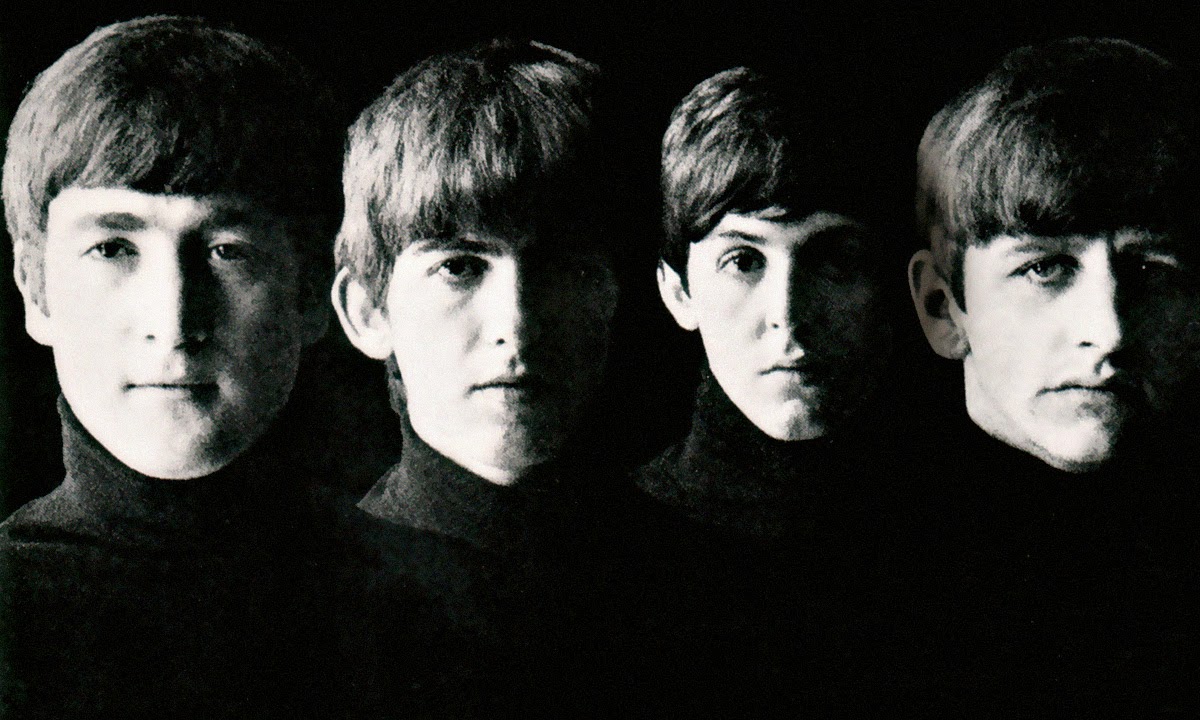
On the evening of Sunday, February 9, 1964, I was sitting in front of our black and white television watching the Ed Sullivan Show.  I had specifically wanted to tune in because I wanted to see this new musical group I had been hearing about and had heard on the AM radio stations in Salt Lake City.

The program that night was watched by over 73 million people--men, women and children.  If you think about the population of the US at the time, roughly around 180 million, that meant that approximately 40% of the population watched that show.  Likely, not all 180 million had televisions then, which would probably mean that over half of the population were on hand to watch these four musical twenty-somethings from Liverpool make history.

What was it about the Beatles that caused such interest?  Was it music that at that time was "edgy?"  Was it seeing boys in suits, behaving initially in a rather conservative way as other performers of the time, but with long hair (for the time) and playing music that had only been played in Europe or by black musicians who weren't (and couldn't) be mainstream?  Was it Paul singing a song from "The Music Man' on that fateful night?  Was it their cleverness in interviews?  Musically, was it the marvelous melodies that McCartney and Lennon wrote, often with engaging harmonies?  Was it time for electric guitars and drums to make their evolutionary appearance on the music scene? Was it their British accents when they spoke?  Was the US coming out of the placid 50s and looking for a good time?  Were the children of World War II parents (now we are known as Baby Boomers) wanting something different? 

Whatever it was, the Beatles arguably changed the world--if not the entire world then certainly the musical world.  That night on the Ed Sullivan Show was the beginning of my lifelong love of their music.  I feel sorry for my children and others who were not yet born because you missed out on a singular, incredible experience.

On January 13th, I posted what were my Beatles Top 40 all-time songs.  I really enjoyed doing that, and encourage my readers to celebrate the 50th anniversary of their first appearance on the Ed Sullivan Show by looking at that list.

As a follow up, and my own tribute to that seminal event, I am posting a Top 10 Beatles song list, but songs which have been covered (sung by others) by notable performers.  I always recognize a cover of a Beatles song; some are memorable, others are not.  Here, then, are my most memorable Top 10 Beatles songs, recorded by other musicians:

10.  Rock and Roll Music -- performed by the Beach Boys.  This distinctly US group, sometimes in supposed competition in the 60s with the Beatles as to popularity, covered this in their own style--it is  most unmistakably a beach/surfing vibe.  This was not an original Beatles composition, but written by the amazing Chuck Berry.
9.   Come Together -- performed by Aerosmith.  It sounded quite similar to the original tune, but Steven Tyler sang this Abbey Road song in his own unmistakable, flamboyant way.  
8.   With a Little Help From My Friends -- performed by Joe Cocker. This cover was the music that introduced the TV show "The Wonder Years" and was sung by this Brit who now resides in the Santa Clarita Valley, not far from where I live.  It is quite different from the original.
7.   Taxman  -- performed by Stevie Ray Vaughan.  Like the previous performers on my list, Stevie Ray made this song his very own.  SRV's guitar playing is on display on this cover.  He has been called the white Jimi Hendrix.
6.   Fool on the Hill -- performed by Sergio Mendes and Brasil 66. Mendes gave this his Brazilian flavor, with flourishes that are unmistakably his.  You know it is the Beatles song, but if you didn't know, you would likely say it was a Mendes composition.
5.   Ticket to Ride -- performed by the Carpenters.  Karen's vocal talents are on display along with Richard's subtle orchestrations.  It is sung much like a ballad, not like the Beatles' original, but it tries to keep true to the original.  Very much a favorite of mine growing up.  I was a huge Carpenters fan, and Karen's alto voice is heavenly (not only because she passed away).
4.   Lucy in the Sky with Diamonds -- performed by Elton John.  This well-known cover is a EJ masterpiece, complete with a section played in a reggae style, and with psychedelic flourishes.
3.   In My Life -- performed by Judy Collins.  Arguably better than the Beatles rendition, Judy sings this wonderful love song with just her guitar and her ethereal voice.  This is the Judy of Suite: Judy Blue Eyes fame!
2.   Blackbird -- performed by The King's Singers.  It is sung a'cappella (without instrumentation), and these consummate artists "sing" as if they are instruments behind the haunting melody.  Even though I love Paul's original, I love this one more!   And #1?
1.   Got to Get You Into My Life -- performed by Earth, Wind and Fire. Clearly, EW&F took this tune to another level, making it completely their own, and outdoing the original.  In their funky, syncopated, horn-filled way, they wrote this piece for the soundtrack of what essentially is a "movie cover" of Beatles' songs: "Sgt. Peppers Lonely Heart's Club Band." While the movie left much to be desired--starring the three Bee Gees and Peter Frampton trying to be "Beatlesque"-- this cover was/is fantastic!

Friday, January 24, 2014

Expectations--From My Perspective

Twice last year, I came awfully close to losing my life; the stalling of my car on a night freeway and the other in a head-on collision.  Last year, I lost a friend in a bicycle accident with a car.  A number of significant public figures from my life passed away in 2013.  Both of my siblings and their spouses are in their 70s, and I would like for them to have another 20 years, but I have no say if that will happen or not.

In 2014, I turn 60.  That is not particularly old now in the 21st Century, but it is not young either.  I'm trying to watch my cholesterol, my weight, my medication-controlled pre-diabetes.  I exercise, and get regular physical and dental checkups in an effort to take care of my body.  I travel in my car around 350 miles a week, which while not the great number of miles I have traveled in my employment in the past, it is still a significant number of miles, and miles in which there is always the possibility of being in an accident, perhaps a fatal accident.

Some might say that I am becoming obsessed with dying.  Perhaps.  But I would like to frame it in another way.  I see myself as being obsessed with living.  I desperately want to live for a long time, whatever age that is.  Secure in my religious beliefs, I am not afraid to die, and actually I look forward to it.  But not yet.  Not now.

Because I don't know whether at my next physical check-up the doctor will find a cancerous lump and tell me I have six months to live, or if some drunk driver will t-bone my car as I innocently go through an intersection, I am grateful each day that something terrible did not happen to me in my past.  Again, those ideas might be viewed as morbid, but I see them as not having an expectation--taking the day for granted, if you will--that I will be alive tomorrow.  When I do wake up and realize I am still around, I feel a great sense of happiness and appreciation--each day. Indeed, in my personal religious observance, I express my desire to God and plead with Him to live another day--I just don't expect it.

I believe, and have written about this, that gratitude and happiness are inextricably connected.  It has been my experience that the happiest people are those who are the most grateful.  Conversely, those who do not feel gratitude are often unhappy.  Look at yourself or those around you, and notice if the happiest people around you are the most grateful.  And I my opinion, being happy does not necessarily mean you constantly wear a smile (although you might!), but rather, you feel a contentment or peace that, at that particular moment, life is pretty good!

I want to connect gratitude and happiness with expectations.  To use my example above, If I expect to live through tomorrow, I may feel grateful tomorrow night, but over time, I will begin to take it for granted.  It is just human nature.  As I begin to take for granted or expect that I will live each day, my appreciation for that gift will likely diminish.  As my gratitude diminishes for this gift because I have come to expect it, I likely won't be as happy or contented as I was when I was more appreciative.

What I am proposing is that reducing one's expectations significantly enhances one's gratitude, and as such, one's happiness or contentment or peace.  

Does that mean that one should have no expectations at all?  We can have the expectation or take for granted that the sun will rise tomorrow--something virtually inevitable, because of the rotation of the earth.  This certitude can exist in some areas of natural life as well, but there can be no certitude in the uncertainty of human life.  We certainly do not have full control over most of the important things in life--our health and the health of those around us, whether we'll get a job we desire, or, in my example above, how long I (or any of my loved ones) will live.

We can control whether we give our best effort; we control whether we act appropriately or not.  Given health and ability, we can also control the quality of our work.  We have free will, or agency.  But we only have control over those matters over which we have complete control. especially matters of human behavior.  Even then, we should have fewer expectations of others' behaviors than of our own.

What about the future?  We can and should have goals, hopes, and ambitions for ourselves, and I believe it is acceptable to make appropriate demands on others, such as fidelity from a spouse or honest work from an employee.  But those really aren't expectations.

So what about expectations of our spouses?  Other than expecting fidelity and no abuse of one another in any form, I believe that should be minimal expectations--we have no control over their behavior.  The more we expect from a spouse, the more likely we are to take them for granted, and the more likely we will not feel grateful for all of the good things they do for us.  Taking a spouse for granted and not feeling or expressing gratitude for them places great stress on the relationship.

So what about expectations of our children?  We should have great hopes for our children.  We should help set goals with them.  We can and should make certain demands on our children because they need them, like doing homework.  But I feel we ought to maintain modest expectations of them, for their sakes.  They ought to be seen as autonomous human beings, not extensions of us.  Unintentionally or intentionally seeing them as a "Mini-Me" can cause them great harm.  That is done out of our own needs and not of theirs; it springs from our own unresolved issues.  Likewise, some parents give their children so much that their offspring come to expect more and more, depriving them of developing their ability to learn gratitude--because they won't feel it.

Also, keeping expectations of our children to a minimum reduces gratuitous disappointment when they decide to not do what we expected of them.  There are so many parents that live sad, ungrateful lives because they had such high expectations of their children who have "disappointed" them and have allowed this disappointment to darken their lives.

Simply stated, expectations are impediments to happiness.  When expectations are unfulfilled they cause gratuitous pain, and when they are fulfilled, they diminish gratitude, the most important element in happiness.  I am really trying to keep my expectations at a bare minimum, and only have them when I have control over the results.  I desire to be grateful because when I am grateful, I am happy, contented, and at peace.


Wednesday, January 15, 2014

Blocks to Listening

Listening is the most important communication skill.  Real listening is rare. It involves more than simply hearing your partner's words or being quiet when your partner speaks.  It represents a commitment to understanding and to empathy.  It is distinguished by the intention of the listener: to understand, learn from, help, or just enjoy your partner.  It allows you to see the world through your partner's eyes.

Many people think they are listening, but they really are engaging in pseudo-listening.  When we listen this way, there is a selective perception occurring in which listening is distorted by judgments about the character, behaviors, and the intentions of the person speaking.  These judgments create a number of real impediments to real listening.  Many do this, at least occasionally.  Honestly assess which of the following blocks get in your way of really listening to your partner.

Mind Reading.  You disregard what your partner is actually saying in favor of trying to figure out what he or she "really means."  Mind readers place great importance on subtle cues such as facial expression, tone of voice, and posture.  The actual meaning of the words is ignored in favor of the listener's assumptions.  EXAMPLE:  Your partner says, "I'm okay," but you hear, "something's wrong, but I don't want to tell you."

Filtering.  You listen to some of your partner's words but not others.  You may listen for what you are expecting to hear ("I'm angry") and tune out everything else ("I really need your support").  Filtering also is used to exclude things that you don't want to hear, usually something about you or the relationship.  EXAMPLE:  How would you respond to the following: "I'm afraid about being isolated from my family if we move out of state" or "I'm concerned about how much time you spend on the computer."

Rehearsing.  After the first few words, you stop listening to what your partner is saying because you're busy rehearsing how you will respond. You miss much of the information your partner is telling you because you are too involved to listen because you're preparing your excuse or justification or defense.  EXAMPLE:  How would you respond to your partner if he or she were sharing their feelings, one of which was about a growing distance between you?

Daydreaming.  Your attention wanders and you only hear bits of what your partner is saying to you.  This is a particular problem for couples who have been together for several years.  Your thoughts focus on your own concerns.  You may even be aware you are having trouble paying attention to your partner.  This sometimes is a passive way of demonstrating anger or resentment.  EXAMPLE:  You become distracted when your partner talks about a recent conversation with his/her mother because you don't like her.

Advising.  As soon as your partner begins to describe a problem he or she is having, you jump in and begin to give advice about how it should be solved.  (This is often done by males!) This can be a way of managing your own anxiety about a situation.  You are so involved in wanting to fix the problem that you ignore your partner's need for emotional support, or to have you just listen and ask for clarification. Advising gives your partner the message that he or she lacks the ability to solve his or her own problems.  EXAMPLE:  Your partner had a unpleasant conversation with a co-worker which he/she thought was rude.

Sparring.  You listen just enough to begin an argument or debate.  You take a position that is opposite to your partner's, and defend it, regardless of what your partner says.  This is characteristic of troubled relationships. There are familiar themes to the back-and-forth, such as money, sex, being late, neatness, or the children.  EXAMPLE:  Your partner states that you are not having enough sex, and you take the opposite position.

Being Right.  You feel the need to protect yourself from anything your partner might say that suggests that you are less than perfect or consistent.  You might engage in shouting, accusing, lying, criticizing, or rationalizing, in order to avoid admitting you might be wrong and your partner could be right.  EXAMPLE:  Your partner begins to talk of their concern that both of you are spending too much money, you break in and begin to defend your most recent purchases.

Derailing.  You make a joke or change the subject whenever your partner begins to talk about something that is too personal, too threatening and close to your core.  In this way, you avoid listening to your partner's serious concerns.  EXAMPLE:  Your partner approaches you with a concern about your health, and you respond by laughing and stating your fine or just too busy to contact the doctor, then you start talking about a problem at work.

Placating.  You agree too quickly.  You are so concerned about appearing supportive or agreeable as possible that you don't give your partner time to express a deep thought or feeling.  EXAMPLE:  Your partner expresses doubt, irritation, or anxiety, about a situation, and you jump right in and offer assurance that you will fix the problem right away.

Judging.  You stop listening to your partner because you've already formed some negative judgment.  You only listen for the purpose of assigning blame or putting negative labels on your partner's motives, words, or behaviors.  You listen to gather fresh evidence to prove the validity of your judgment.   EXAMPLE:  Your partner attempts to tell you about a problem they're having and you stop listening, thinking "here we go again."


Based upon the work of Carl Rogers (1951) and McKay, Davis and Fanning (1983).

The Elements of Equality in Spousal Relationships

ATTENTION. Both partners are emotionally attuned to and supportive of each other. And both feel invested in the relationship, responsible for attending to and maintaining the relationship itself.

INFLUENCE.  Partners are responsive to each other's needs and each other's bids for attention, conversation, and connection. Each has the ability to engage and emotionally affect the other.

ACCOMMODATION.  Although life may present short periods when one partner's needs take precedence, it occurs by mutual agreement; over the long haul, both partners influence the relationship and make decisions jointly.

RESPECT.  Each partner has positive regard for the humanity of the other sees the other as admirable, worthy of kindness in a considerate and collaborative relationship.

SELFHOOD.  Each partner retains a viable self, capable of functioning without the relationship if necessary, able to be his or her own person with inviolable boundaries that reflect core values.

STATUS.  Both partners enjoy the same freedom to directly define and assert what is important and to put forth what is the agenda of the relationship. Both feel entitled to have and to express their needs and goals and bring their full self into the relationship.

VULNERABILITY.  Each partner is willing to admit weakness, uncertainty, and mistakes.

FAIRNESS.  In perception--determined by flexibility and responsiveness--and behavior, both partners feel that chores and responsibilities are divided in ways that support individual and collective well-being.

REPAIR.  Conflicts may occur and negativity may escalate quickly, but partners make deliberate efforts to de-escalate such discussions and calm each other down by taking time-outs and apologizing for harshness.  They follow up by replacing defensiveness with listening to the other's position.

WELL-BEING.  Both partners foster the well-being of the other physically, emotionally, and financially.  

Monday, January 13, 2014

Beatles Top 40

In September and October of 2011, because of my love of all kinds of music, I decided that I wanted to make "Bob's Top 40" for two music loves of my life, classical music and hard rock music.  It was fun to do.  Since that time, I've thought about doing it again with my other music tastes. When my wife gave me a box set of Beatles songs--very comprehensive, from 1963 to 1969--for Christmas, and because I have been a BIG fan of theirs my entire life and know (and can sing from memory) nearly all of their songs, I decided to do a Top 40 of Beatles songs.

There were SO MANY songs from which to choose: simple songs, "transitional" songs, psychedelic songs, political songs.  It was a challenge to narrow the list to just 40, and then to prioritize them in ascending order as I did in 2011.  

My criteria was basically: a song's complexity or lack, the "tunefulness" of the melody, the instrumentation, the harmonies (if there were any), how they make me feel as I listen to and sing along, their uniqueness.  I understand this is 100% subjective; in fact, while some of their most well known songs make my Top 40, for the most part they are closer to the bottom than to the top of my list.

I love their songs.  I love how their songs have enriched my life since that fateful Sunday night on the Ed Sullivan show so long ago.  I love how fun it is to sing along to their hundreds of songs.  I love that their songs are on my brain's "hard drive" which allows me to sing along with no effort.  To me, they are the greatest rock group of all time.  

So here is my Beatles Top 40, with some commentary about each:
40.  Back in the USSR.  From the White Album, this harks back to Cold War days.  It has what I always thought was the cool sound of jet engines.
39.  We Can Work It Out.  The lyrics of the song's bridge resonate through the years: "Life is very short and there's no time for fussing and fighting, my friend."
38.  I Am the Walrus.  "Koo-koo-ka-choo."  A psychedelic masterpiece that seems to say in the chant toward the end "Smoke pot, smoke pot, everybody smoke pot."
37.  Fool on the Hill.  Another psychedelic masterpiece sung by Paul. "The eyes in his head see the world spinning round."
36.  Day in the Life.  This was Rolling Stone's #1 Beatles song.  It's innovative, interesting, political, and has the tremendous multiple piano strike at its conclusion.
35.  Hey Jude.  This song, dedicated to John's son, Julian, is a classic by any measure.  It is a crowd favorite at Paul McCartney concerts to this day.
34.  Nowhere Man.  John and Paul would occasionally start a song without instruments; this is one of them.  Great harmonies amid the "la-las."  Rather than just pointing out what this fictional person is missing, John finally sings "isn't he a bit like you and me?"
33.  Yesterday.  The most covered pop song ever.  This song began its life as "Scrambled Eggs" until Paul figured it out.  A haunting, wistful melody to be sure.
32.  All My Loving.  An early song that has a driving beat with a nice George instrumental interlude in the middle.  I like hearing Paul's soaring vocals and the harmonies of this piece.
31.  Honey Don't.  My favorite of songs sung by Ringo.  This, like "What Goes On," has an attractive (to me) country sound.  I like hearing Paul's "boogie-woogie" type bass on parts of the tune. 
30.  Michelle.  Another ballad sung by Paul, interspersed with French. Can't say the lyrics grab me, but it has a nice melody line.
29.  A Day in the Life.  This political song was #1 in Rolling Stone's top 100 songs.  It is a masterful musical journey with the memorable multiple piano strike at the end.  I seem to struggle with the words sometimes.
28.  Roll Over Beethoven.  This was my favorite song on my first Beatles album.  It sounds like it should be in the movie "Back to the Future."  That's because it was written by Chuck Berry, the original duck-walker!
27.  Savoy Truffle.  An obscure song from the White Album about a yummy dessert.  This tune sung by George has what sounds like baritone or bass saxophones--an unusual touch.
26.  Let It Be.  One of the best known Beatles tunes.  It was immortalized for a new generation when Sesame Street spoofed it, using the tune to sing about the"Letter B."
25.  I'll Follow the Sun.  Harking back to the beginnings, the hidden gem is a nice ballad sung by Paul, full of lovely harmonies.  "Tomorrow may rain, so I'll follow the sun."
24.  She's a Woman.  This song is not to be found anywhere in the box set.  Strange, because it was really popular back in the day.  There is a little time signature changing which makes it more interesting.
23.  Piggies.  You have to love a pop song that has pig sounds in it. This piece is full of vindictive railing against the "Establishment" and sung with snide by George.
22.  Norwegian Wood.  "I once had a girl, or should I say, she once had me."  Thus begins the lyric of this all acoustic song sung with relish by John.  
21.  Think for Yourself.  This is a song that I didn't discover until a few years ago, and I really like it.  I enjoy listening to Paul's fuzz bass throughout the song.
20.  Good Day Sunshine.  The tune is a upbeat, positive, happy tune that makes me feel good.  I remember thinking about this song on a vacation trip to Bear Lake many years ago.
19.  Day Tripper.  A great guitar riff starts out this song, and repeats again.  "Sunday driver, yeah."  Just a fine song that is easy to sing along with.
18.  Paperback Writer.  This song has a driving beat with a memorable guitar riff throughout.  Nice harmonies, but not a love song.
17.  In My Life.  This romantic ballad sung by John is a favorite.  It has had special meaning through the years since it was played at my California wedding reception.
16.  Eight Days a Week.  Another song from my early days, I always wondered why it wasn't called Seven Days a Week.  Nice harmonies.
15.  No Reply.  To me, this has a rather haunting melody, perhaps because it was written in a minor key.  I love the melody and the harmonies in this song about someone who is obsessed.
14.  Strawberry Fields Forever.  This psychedelic song is full of experimentation, the boys wanting to push the envelope musically.  It's most unique feature is at the end when the music is played backwards. Then to perpetuate the rumor, at the end we hear "I buried Paul."
13.  Here, There and Everywhere.  A romantic ballad sung in a fairly high register.  "When she's beside me I know I need never care."  This song was the title song of an infamous American-released album.
12.  You've Got to Hide Your Love Away.  A memorable song from the memorable "Help" soundtrack.  Sung by John, I do a pretty good imitation of him singing it.
11.  I'll Be Back.  This song also has a haunting melody.  A rather obscure song, it is also written in a minor key.  Except for the bridge, nearly all of the song's melody is joined with harmony, which I find marvelous.
10.  I Want to Hold Your Hand.  This was the last and for me the most memorable song of their first appearance on the Ed Sullivan Show. That first appearance was seen by over 73 million viewers--and me!
 9.    Tell Me Why.  Lots of harmonies in this early song.  I've always liked singing along with it.  I have unsuccessfully tried to imitate the falsetto notes in the middle of the song.
8.    I Feel Fine.  This song begins with one of the most well-known guitar riffs ever.  I've heard it in a number of other songs by other groups.  "I'm so glad that she's my little girl."  Hmmmm.
7.    Blackbird.  An acoustic beauty with just gentle tapping, Paul's unmistakable voice, and a blackbird singing.  This is a great song to teach yourself if you are learning to play the guitar.
6.    Another Girl.  A great song from the "Help" soundtrack.  I will always remember how cool it was to see Paul playing this song in the movie with a girl in a bikini and her arm extended as his guitar.
5.    The Night Before.  One more song from the "Help" soundtrack, it is full of harmonies and memorable lyrics.  "When I held you near, you were so sincere."
4.    I'll Cry Instead.  My favorite of their upbeat songs.  I've always liked this song from the early years.  Not only a great melody, but it has Paul playing down the neck of his bass guitar--which I've always loved.
3.    And I Love Her.   Paul is at his finest in this early love ballad.  Great lyrics, a lovely melody, yet another song in a minor key that finally resolves on the last note.
2.    Abbey Road--Side 2 Medley.  Comprising almost the entire 2nd side of the album, it is the Beatles at their best, able to comfortably compose and perform in a number of different styles with ease.  "And in the end, the love you take is equal to the love you make."  It was the end.  And #1 is...
1.    If I Fell.  A beautiful, romantic ballad full of harmonies.  I cannot control myself when I hear this tune; I have to sing John's harmony part. Is it the Beatles' best song?  I think so.


Monday, January 6, 2014

Three Blogs Now Instead of One

To begin the new year, I made the decision to take this blog and spin off parts of it.  I have sometimes felt as I have referred people I see in a therapeutic setting to this blog that I was sharing a bit too much of me.  It has sometimes seemed that I may have made myself somewhat too transparent to a client.  I also believe that because of my prominent religious beliefs, I may have made someone feel uncomfortable about my religiosity.

To that end, I will continue to write about the transitions in my life in this blog.  Obviously, part of those transitions will take place in the therapeutic and religious worlds I inhabit.  But those postings which are basically therapeutic in nature, or are basically religious in nature, will be posted on new blogs I've already established. 

The new blog for therapeutic postings is to be found at:

redmft.blogspot.com  (RED Marriage and Family Therapist)

The new blog for religious postings is to be found at:

redashisdisciple.blogspot.com  (RED As His Disciple)

By the way, regarding the religious blog, I kept a Book of Mormon Journal as I read the Book during 2013.  I have included it on that blog.

As of today, all of the postings on "redmft" are merely postings from this blog.  The same is true of "redashisdisciple" except the Journal. 

Again, I appreciate those few souls who have been reading some or all of my redintransition.blogspot.com postings, and the fewer souls who make comments.  As you may have noticed recently, I again changed the look of the blog (all of the blogs have the same look) to be RED in color.  I changed it from the original template (this is the 3rd) because comments could not be left. I've been told that is the case with this new template, which is very frustrating to me.  I have taken steps I believe will allow comments, but in case I still don't have the bug worked out, please inform me at my email address:

redintransition@gmail.com

I encourage anyone who may want to say something to not be shy but to write comments.  They are helpful to me.